The twelve Chinese zodiac animals: branch, hours and what each one means
The twelve animals of the Chinese zodiac are a cycle, not a set of personality types. Each animal is welded to one of the twelve Earthly Branches (地支, dìzhī), and each branch owns a two-hour slot of the old Chinese day. That three-way pairing — animal, branch, double-hour — is the part that is actually documented and stable. The personality readings that get attached to each animal are folk astrology, and this page keeps the two apart.
Below, all twelve in order, each with its branch, its hours, its element and polarity, and the guardian figure (本命佛, benmingfo) that the folk tradition assigns to it. If you only want to know which animal you are, that is a different question and the birth-year chart answers it.
The twelve at a glance
Read this table first. Everything after it is detail.
| # | Animal | Branch | Pinyin | Double-hour | Element | Polarity | Guardian |
|---|---|---|---|---|---|---|---|
| 1 | Rat | 子 | zǐ | 23:00–01:00 | Water | Yang | Avalokiteshvara |
| 2 | Ox | 丑 | chǒu | 01:00–03:00 | Earth | Yin | Akasagarbha |
| 3 | Tiger | 寅 | yín | 03:00–05:00 | Wood | Yang | Akasagarbha |
| 4 | Rabbit | 卯 | mǎo | 05:00–07:00 | Wood | Yin | Manjushri |
| 5 | Dragon | 辰 | chén | 07:00–09:00 | Earth | Yang | Samantabhadra |
| 6 | Snake | 巳 | sì | 09:00–11:00 | Fire | Yin | Samantabhadra |
| 7 | Horse | 午 | wǔ | 11:00–13:00 | Fire | Yang | Mahasthamaprapta |
| 8 | Goat | 未 | wèi | 13:00–15:00 | Earth | Yin | Vairochana |
| 9 | Monkey | 申 | shēn | 15:00–17:00 | Metal | Yang | Vairochana |
| 10 | Rooster | 酉 | yǒu | 17:00–19:00 | Metal | Yin | Acala |
| 11 | Dog | 戌 | xū | 19:00–21:00 | Earth | Yang | Amitabha |
| 12 | Pig | 亥 | hài | 21:00–23:00 | Water | Yin | Amitabha |
Three patterns fall out of that table without any interpretation:
- Polarity alternates. Yang, yin, yang, yin, all the way round. Odd-numbered animals are yang, even-numbered are yin.
- There are only four elements. Water, Earth, Wood, Fire, Metal appear in a repeating order, but Wood and Fire each get two animals in a row while Earth gets three. Nothing is missing — Earth is the pivot the other four turn around.
- Eight guardians cover twelve animals. Four of them serve two animals each. That is why the benmingfo chart is not a one-to-one list.
The twelve, one by one
The images below are illustrations of the twelve animals rendered as gilded temple figures. They are artwork made for this article, not photographs of anything for sale.
1. Rat — 子, zǐ
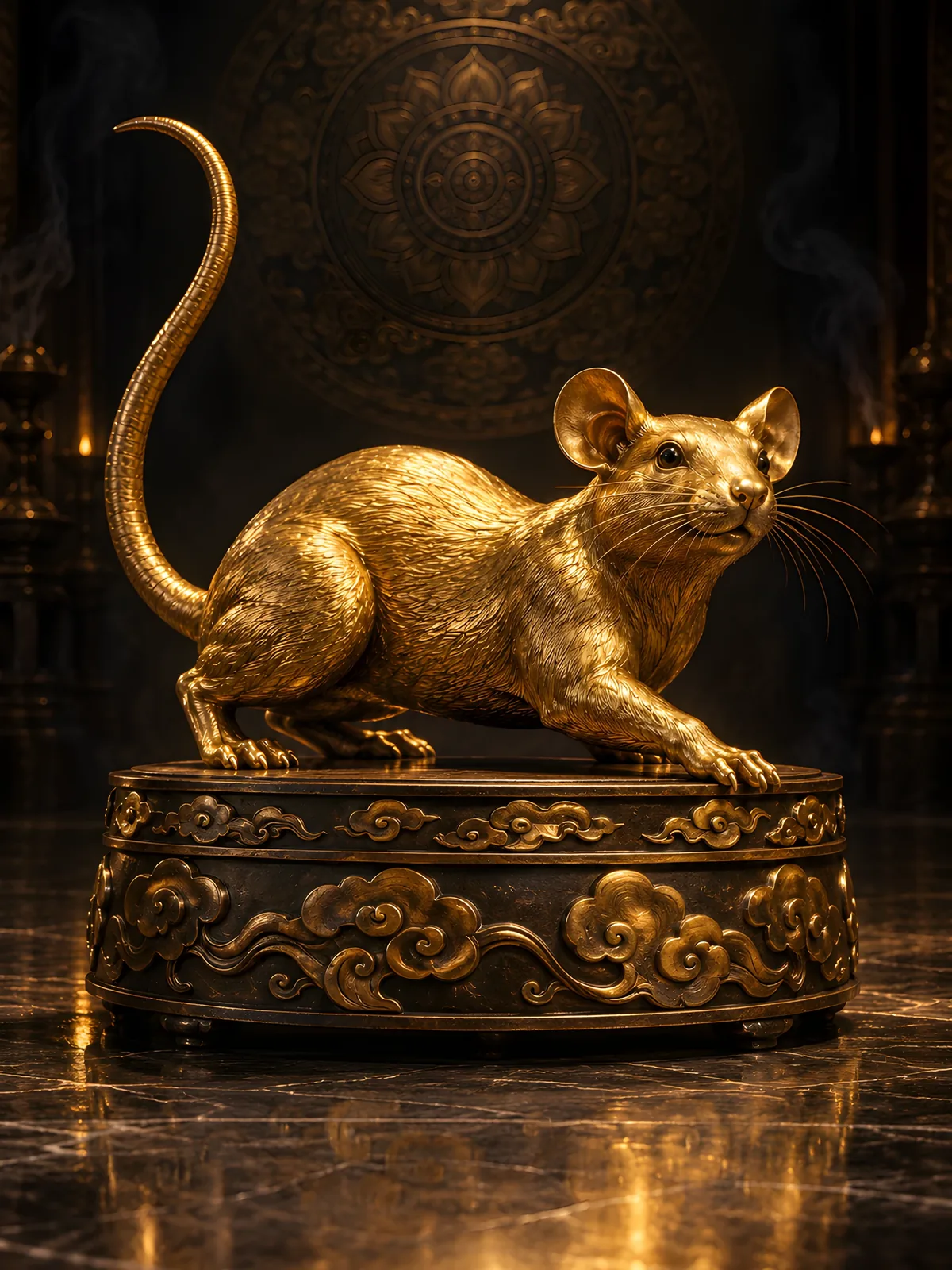
Hours 23:00–01:00 · Water · Yang · Guardian: Avalokiteshvara.
The rat opens the cycle because its branch, 子, sits at the darkest midpoint of the night. This is the one animal whose slot straddles midnight rather than sitting inside a single day. In the old reckoning that made it the natural first entry, and the folk stories about a race were invented later to explain an order that already existed.
The tradition reads the rat as resourceful and quick to adapt — an animal that survives by noticing. Avalokiteshvara, its guardian, is the bodhisattva of compassion.
2. Ox — 丑, chǒu
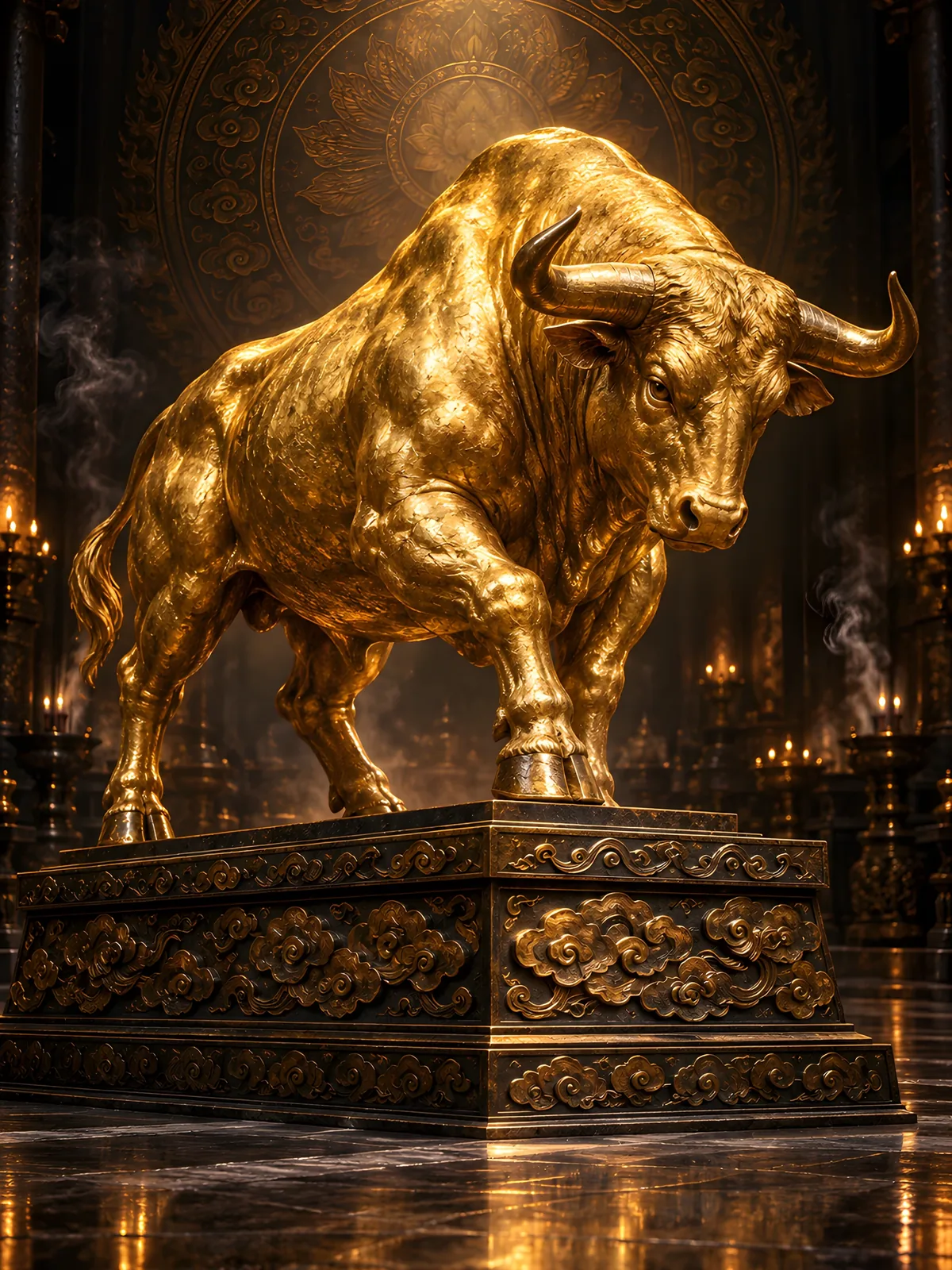
Hours 01:00–03:00 · Earth · Yin · Guardian: Akasagarbha.
The ox holds the small hours, when the night is deepest and nothing appears to be happening. The tradition reads it as patient and immovable — the animal that finishes because it does not stop, not because it is fast.
Akasagarbha, its guardian, is associated with inexhaustible store — the idea of a reserve that does not run out. The pairing with the ox is not accidental.
3. Tiger — 寅, yín

Hours 03:00–05:00 · Wood · Yang · Guardian: Akasagarbha.
The tiger’s slot is the hour before dawn, when the night is ending but the light has not arrived. It shares the yang half of the Wood phase with no one — the rabbit takes the yin half that follows.
The tradition reads the tiger as forceful and uncontainable. It shares Akasagarbha with the ox, which is worth noticing: the same guardian covers the animal that waits and the animal that strikes.
4. Rabbit — 卯, mǎo
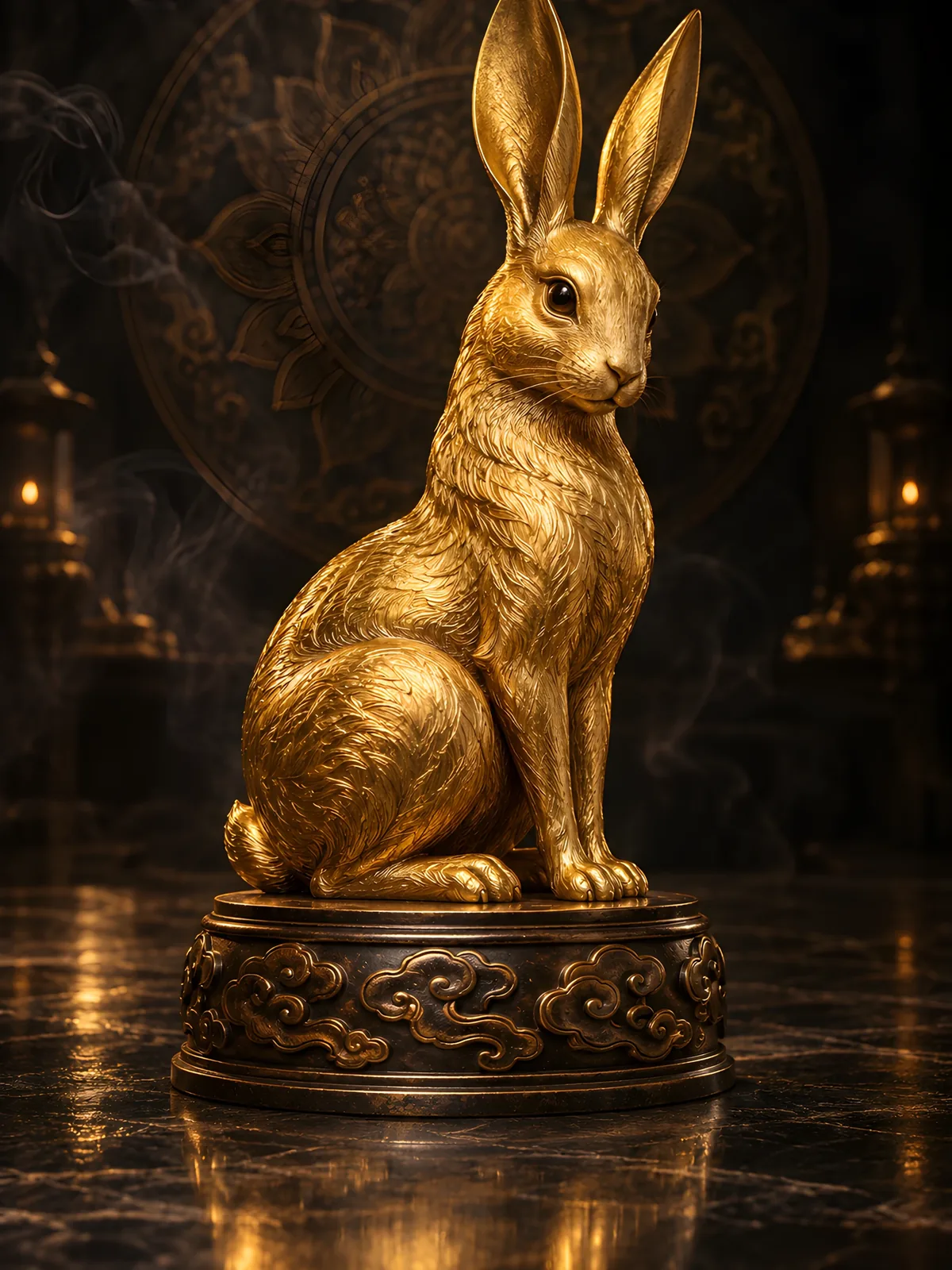
Hours 05:00–07:00 · Wood · Yin · Guardian: Manjushri.
Dawn itself. The rabbit’s branch is the one the old calendars used to mark the moment the day turns, which is why 卯 appears so often in classical Chinese timekeeping.
The tradition reads the rabbit as cautious and discerning rather than timid — the animal that survives by choosing when not to move. Manjushri, its guardian, is the figure associated with discriminating wisdom, which fits that reading more closely than the usual “gentle” shorthand suggests.
5. Dragon — 辰, chén
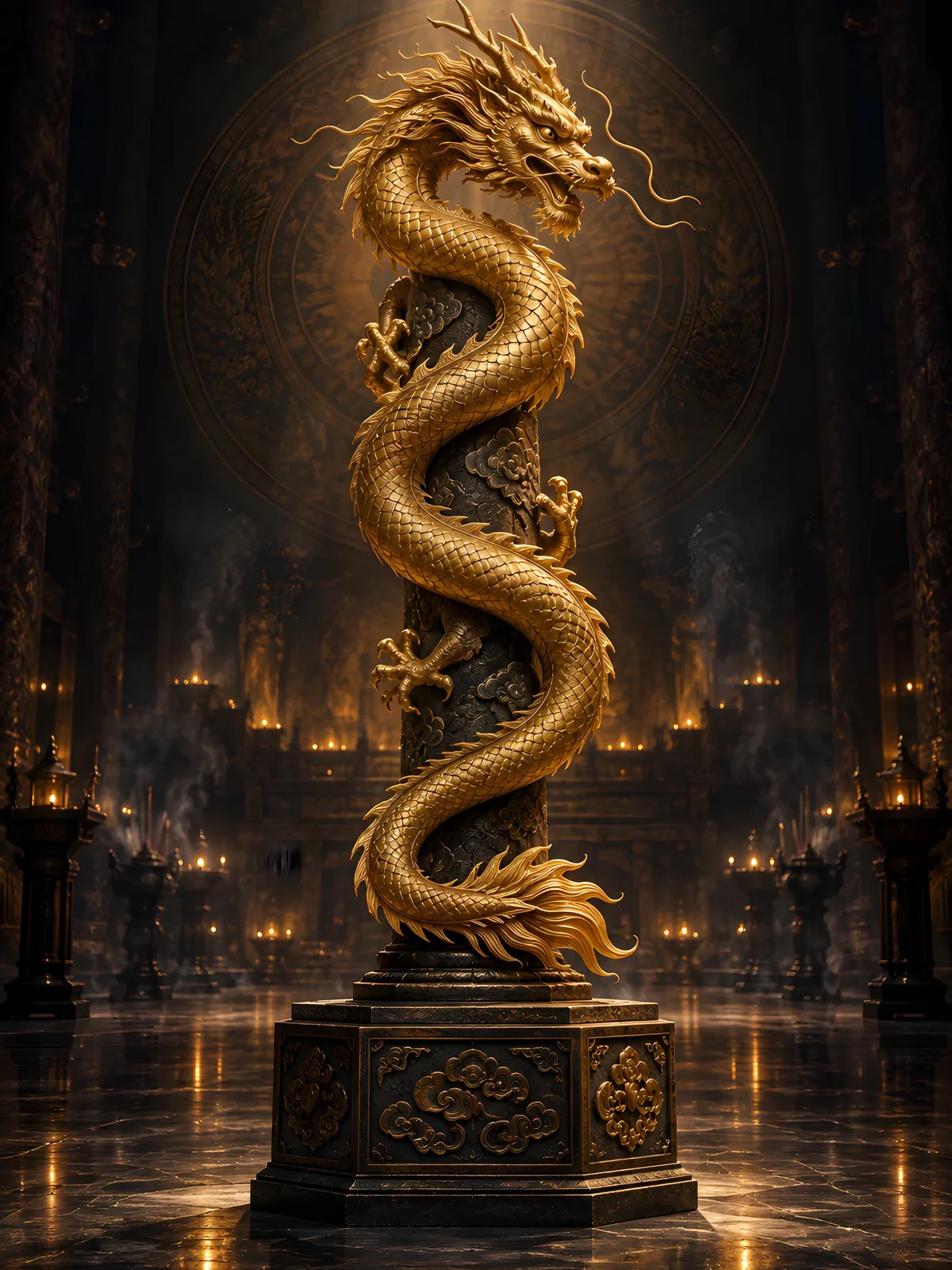
Hours 07:00–09:00 · Earth · Yang · Guardian: Samantabhadra.
The dragon is the only animal in the cycle that is not a real one, and its hour is the start of the working morning. In Chinese cosmology the dragon is associated with rain and with the movement of water underground — an earth-phase animal that governs a water function, which is exactly the kind of overlap the system tolerates.
Samantabhadra, its guardian, is associated with practice and conduct rather than doctrine. The dragon shares that guardian with the snake.
6. Snake — 巳, sì
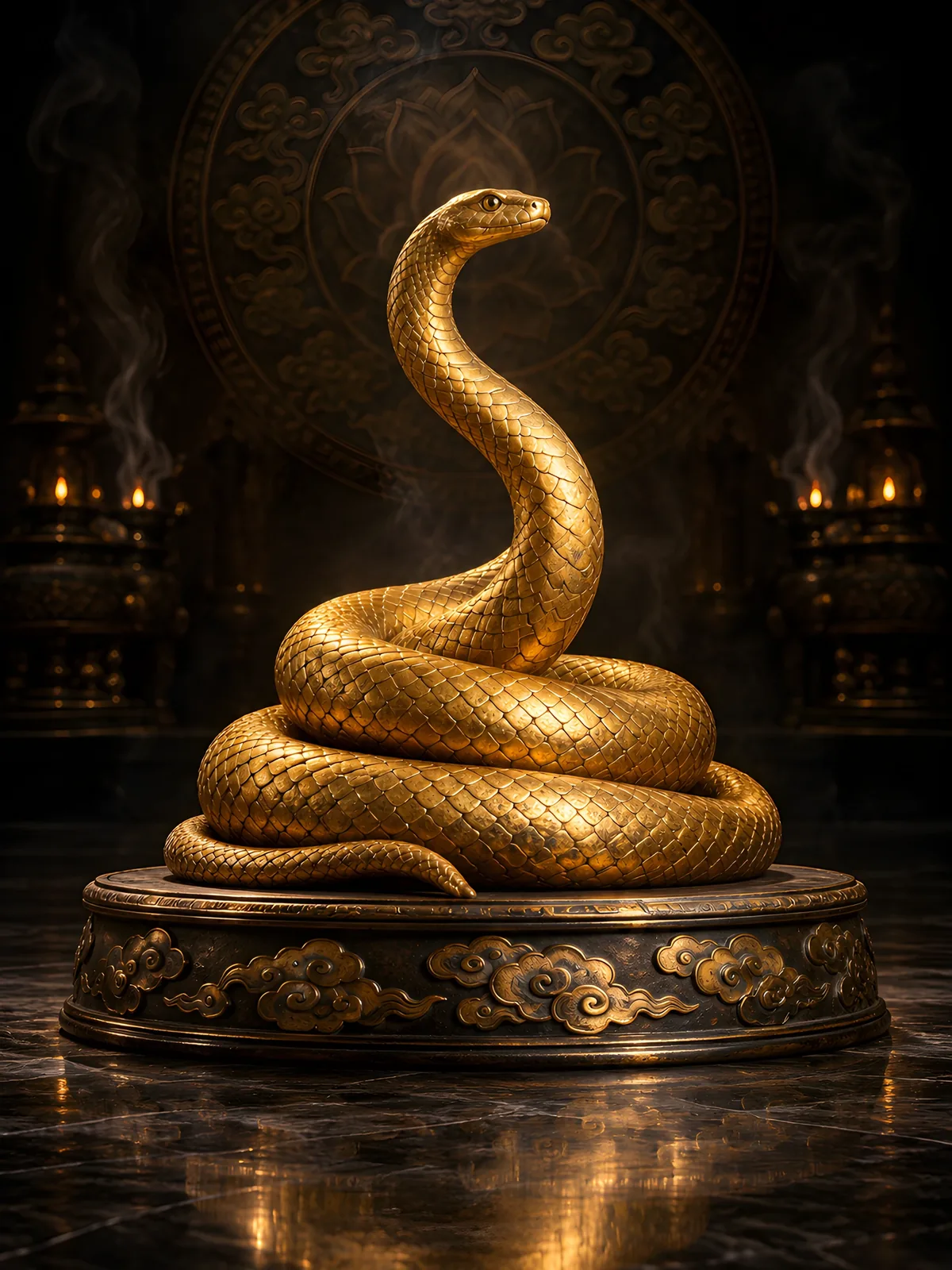
Hours 09:00–11:00 · Fire · Yin · Guardian: Samantabhadra.
The snake takes the late morning, and it carries the yin half of Fire — the only yin animal in a fire phase. That combination is the reason the snake is read as intense but withheld rather than openly hot.
In Western shorthand the snake is a villain. In the Chinese cycle it is closer to a strategist: the tradition reads it as perceptive and deliberate, an animal that moves once.
7. Horse — 午, wǔ

Hours 11:00–13:00 · Fire · Yang · Guardian: Mahasthamaprapta.
Midday. The horse sits at the exact centre of the day and of the cycle — the seventh of twelve — and it carries yang Fire, the hottest position in the whole system. There is no more exposed slot in the table.
The tradition reads the horse as direct and energetic, sometimes to the point of impatience. Mahasthamaprapta, its guardian, is associated with the power of concentrated intention.
8. Goat — 未, wèi

Hours 13:00–15:00 · Earth · Yin · Guardian: Vairochana.
The goat takes the early afternoon, the first hour after the peak. It is the first of three Earth-phase animals in a row — goat, then monkey, then rooster — which is the longest run of one element in the cycle.
The tradition reads the goat as mild and aesthetically inclined. It shares Vairochana with the monkey; Vairochana is the central figure in much of East Asian esoteric Buddhism, which makes it an odd fit for the quietest animal in the second half.
9. Monkey — 申, shēn
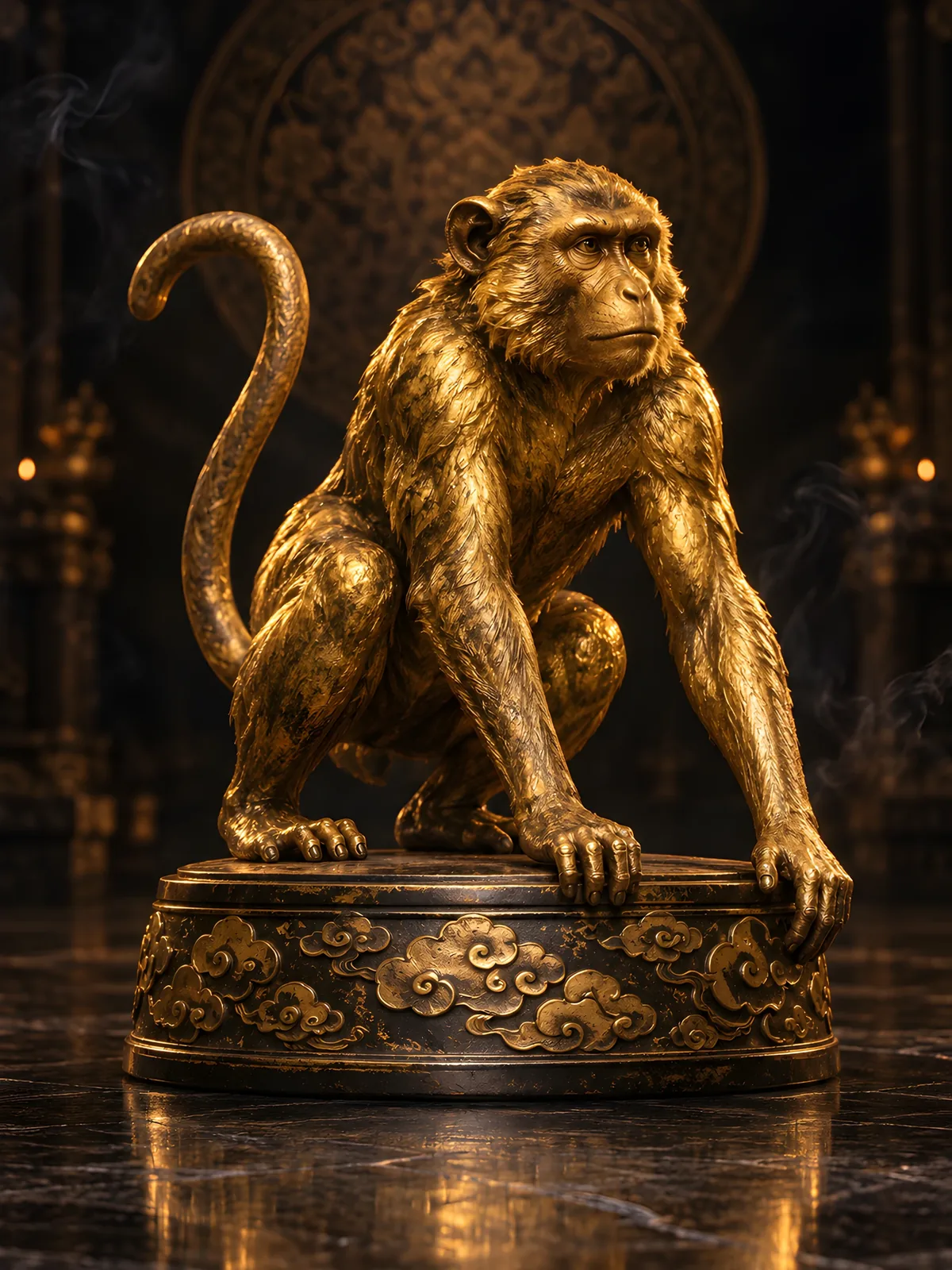
Hours 15:00–17:00 · Metal · Yang · Guardian: Vairochana.
The monkey opens the Metal phase and the second half of the day at once. Metal in this system is not about hardness — it is about precision and cutting, which is why the tradition reads the monkey as clever rather than strong.
Its association with the trickster figure Sun Wukong comes from literature, not from the zodiac system. That is a later overlay, and worth keeping separate.
10. Rooster — 酉, yǒu
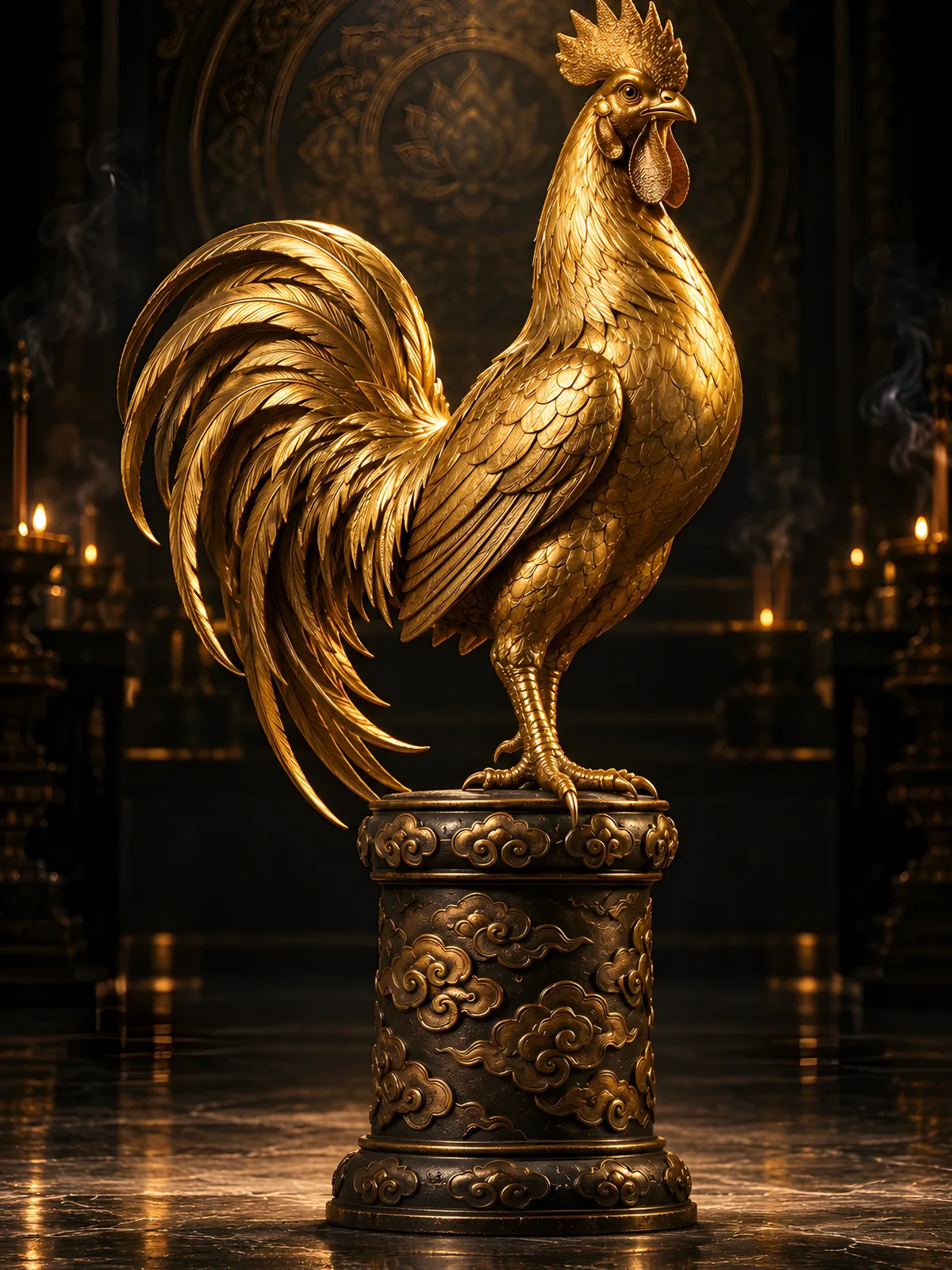
Hours 17:00–19:00 · Metal · Yin · Guardian: Acala.
The rooster holds sunset. It is the only animal whose guardian is a wrathful figure: Acala, the immovable one, depicted with a sword and a rope. Every other guardian in the table is a bodhisattva or a buddha.
The tradition reads the rooster as punctual and exacting. The pairing with Acala is the most visually striking mismatch in the cycle — a farmyard bird assigned the most severe figure in the set.
11. Dog — 戌, xū

Hours 19:00–21:00 · Earth · Yang · Guardian: Amitabha.
The dog takes the evening, when the household closes. The tradition reads it as loyal and boundary-keeping, which is a fair description of what a dog actually did in a village at that hour.
Amitabha, its guardian, is the most widely invoked figure in East Asian Pure Land practice. The dog shares that guardian with the pig.
12. Pig — 亥, hài

Hours 21:00–23:00 · Water · Yin · Guardian: Amitabha.
The pig closes the cycle in the last hour before the rat reopens it at 23:00. Water, yin, the end of the day — the table resolves exactly where it started.
The tradition reads the pig as generous and unguarded. In Chinese rural life the pig was the household’s stored wealth, which is probably where the association with plenty comes from rather than any character judgement.
Why the order is the order
Every popular retelling says the animals raced across a river and finished in this sequence. The race is a story told about the order, not the reason for it.
The Earthly Branches are older than the animals attached to them. They are attested in Shang-dynasty divination records, where they were used to count days, and the animal associations were attached to the branch sequence later. The branches themselves are twelve ordered symbols with no inherent animal meaning — the animals are one of several cultural categories that were mapped onto an existing cycle.
So the honest answer to “why is the rat first” is: because 子 is the first branch, and 子 sits at midnight. The rat got that slot. The race story is a memorable folk explanation for a fact that was already fixed.
What your animal does not tell you
Three things are worth saying plainly, because the internet is full of the opposite.
- It is not a personality test. The character readings above are folk astrology, repeated across many sources, and they have no predictive standing. They are culturally interesting and worth knowing accurately. They do not describe you.
- It is one variable out of many. Traditional Chinese astrology weighs the animal alongside the branch, the year’s element, the month, the day and the hour. A single animal taken alone is the crudest possible slice of that system, which is why serious practitioners do not read from it.
- Compatibility charts are not in the classical sources as a rule. The six-harmonies and six-conflicts grids are widely published and widely believed, but they are folk systematisation, not doctrine.
We make and sell jewellery that uses these motifs, so we have a stake in how this reads. Our position: the twelve animals are a real and well-documented piece of Chinese calendrical and religious history, worth getting right, and not a mechanism that produces outcomes.
If you are choosing a piece for someone
Once you know the animal, the practical question is which motif to wear. Three things actually help:
- Use the animal, not the guardian, for a gift. The animal is public knowledge — anyone can look up a birth year. The guardian requires knowing the benmingfo mapping, and a wrong guess is a visible error.
- Check the birth year against the Lunar New Year boundary. Someone born in January or early February may belong to the previous animal. The chart lists the exact boundary dates, and this is the single most common mistake in zodiac gifting.
- Match the piece to how they actually live. A cord bracelet and a steel ring fail in different ways. What the material label really means is the place to start if that is the deciding factor.
Common questions
Are the animals the same as the Western zodiac signs?
No. The Western signs divide the year by month; the Chinese animals divide it by year, and each one also owns a two-hour slot of the day. The two systems are unrelated and do not map onto each other.
Why are there twelve animals but only eight guardians?
Because four guardians serve two animals each. Akasagarbha covers ox and tiger, Samantabhadra covers dragon and snake, Vairochana covers goat and monkey, and Amitabha covers dog and pig. The remaining four — Avalokiteshvara, Manjushri, Mahasthamaprapta and Acala — serve one animal each. The full mapping is here.
Is the goat the same as a sheep?
In Chinese it is one animal, 羊 (yáng), which covers both. English translations split between “goat” and “sheep” arbitrarily; the underlying branch is the same either way.
Does the animal change if I was born in January?
Possibly. The Chinese year begins at the Lunar New Year, which falls between late January and late February. Anyone born in that window needs to check the boundary date for their year before assuming an animal.
Which animal is the current year?
That changes annually and is not fixed content, so we do not print it here. Check the Lunar New Year date for the year you are asking about rather than trusting a page that may be a year out of date.
Sources
- Wikipedia, Earthly Branches — the branch/animal/element/polarity/double-hour table used above. Accessed 19 October 2026.
- Wikipedia, Chinese zodiac — history of the branch system, and the compatibility grids discussed under “What your animal does not tell you”. Accessed 19 October 2026.
- The guardian mapping follows the benmingfo tradition as documented on this site; see the eight guardian deities chart for the caveats attached to it.
The double-hour ranges, elements and polarities in the table are the standard correspondence. Where sources differ — mainly on the exact English rendering of 羊 — we have noted it rather than picked silently.