What Is a Pixiu Pendant? Meaning and How to Wear One
A pixiu pendant is a necklace whose face carries the pixiu, a lion-bodied beast of Chinese folk tradition that is said to gather wealth and keep hold of it. It is worn as a cultural symbol, not as a promise of any outcome, and on this site the pixiu appears as one of the ten designs of the engraved steel guardian pendant necklace.
This guide covers what the beast is, what the pendant is taken to mean, how the piece is made here, how to wear and pair it, how to choose between the pixiu and the birth-year guardian designs, and how to keep it looking right.
What is a pixiu in Chinese tradition?
The pixiu (pronounced roughly “pee-sheu”) is one of the auspicious beasts of Chinese tradition, usually pictured as a winged lion with a single horn or antler, dragon-like scales, and a body that mixes feline and dragon features. Popular lore counts it among the sons of the dragon and gives it a taste for gold, silver and jewels, which is the first clue to why it ended up on jewellery rather than only on rooftops.
The figure has a long career as a guardian of entrances. Carved pairs of pixiu still stand at the gates of temples, banks and old courtyard houses, set to face outward as if keeping watch. What starts as a door guardian became, over time, a personal emblem: the same beast, scaled down to a pendant face, worn on a chain instead of standing at a doorway.
Why does folk tradition say it never lets go?
The detail that gives the pixiu its money meaning is this: folk tradition says the beast has no rear opening, so whatever it swallows stays with it forever. A creature that only takes in and never lets out is the natural mascot for gathering and keeping wealth, and that is exactly the role the pixiu grew into.
The beast traditionally appears in two forms, and old sources pair them. The tianlu (“heavenly fortune”), with one horn, is associated with attracting wealth; the bixie, with two horns, is associated with warding off harm. In later popular culture the figure spread to the doorways of banks and gaming houses, which carried the wealth association far beyond China. The background is covered at greater length on Pixiu on Wikipedia.
What the pixiu pendant symbolizes
Wearing the pixiu puts the same idea on your chest. In folk practice the beast is the symbol of people whose work turns on money – merchants, traders and anyone who likes the thought of wealth that arrives and stays. The bixie side of the tradition adds a second layer: the two-horned form is carried for warding off harm, so the pendant reads as both gatherer and guard.
That is why the design sits comfortably next to zodiac animals and mantra texts in the same jewellery case. All three are symbols with stories; the pixiu is simply the one whose story is about holding on to what comes in.
To be plain about it: none of this is a claim that a pendant changes an outcome. It is what the symbol has meant to people for a long time, and the pendant is worn for that meaning, the same way one wears a zodiac animal or a mantra text – as a piece of Chinese zodiac jewellery with a story behind it.
How this house makes its pixiu pendant
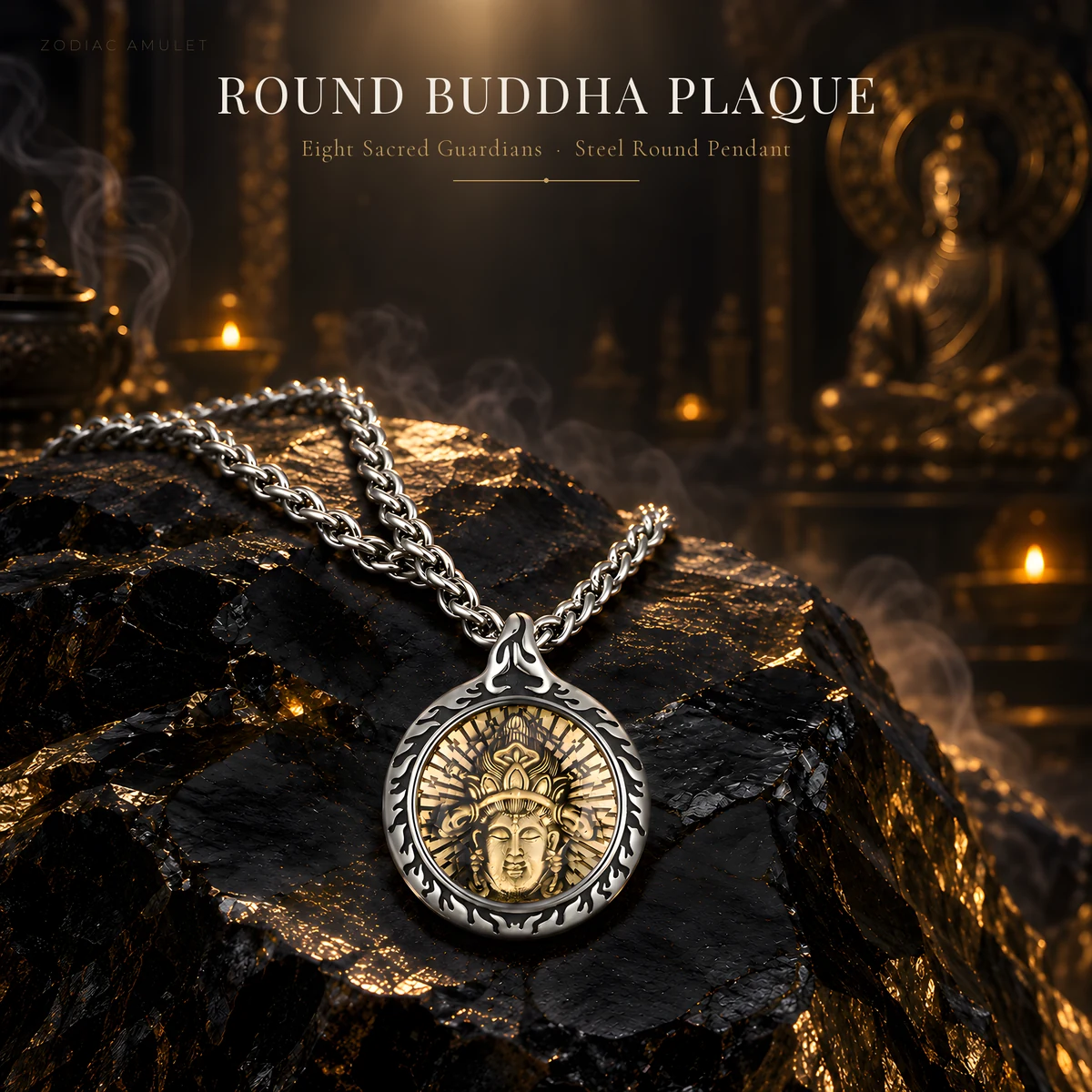
The pixiu lives inside a single listing: the engraved steel guardian pendant necklace. The listing carries ten designs in total, so the pixiu is one variant inside it, not a separate product.
What are the ten designs in one listing?
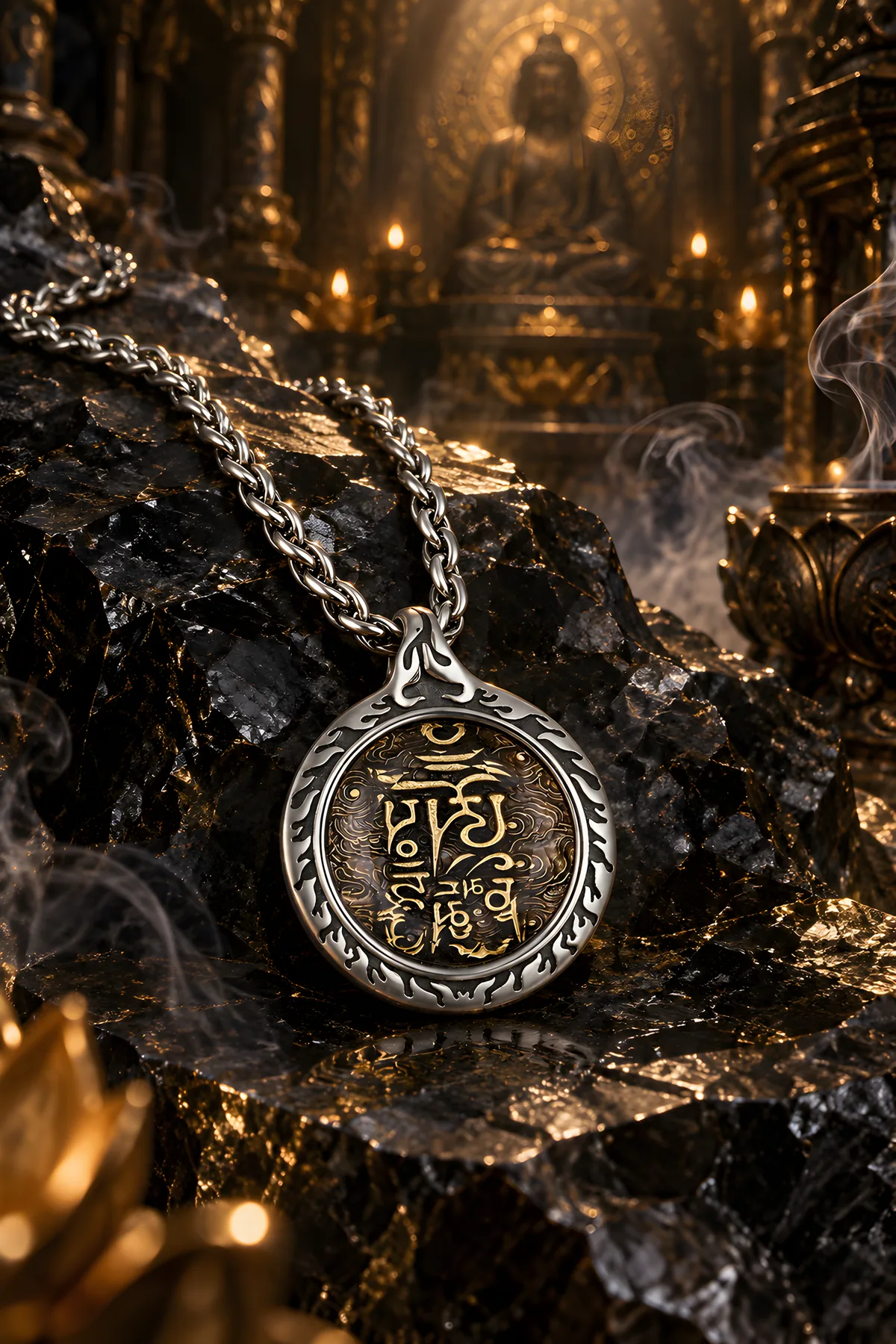
Eight of the ten designs are the birth-year guardian deities of Chinese tradition, each matched to a zodiac animal or a pair of animals. The two designs that sit outside that guardian-zodiac pairing, listed on their own, are the Six-Syllable Mantra and the Pixiu.
The pendant face is engraved in titanium steel, a metal chosen for everyday wear, and it hangs on a 70 cm dragon-bone chain – a linked design in the same metal family – so the piece sits around the upper chest. It is unisex, in a style the listing calls ethnic / vintage-literary, and it is priced at $69.
How to wear and pair it
The 70 cm chain lands at the upper chest, which makes the pendant a statement layer over a shirt, a sweater or a plain tee rather than a fitted collar piece. It is one-size and unisex, so there is no size to choose; the listing describes it as worn as a statement layer rather than a fitted item, which also makes it an easy gift – the fit is already decided.
For pairing, the natural companion is the sibling design from the same listing: the house makes the same Six-Syllable Mantra text as a spinning ring, the six-syllable mantra spinning ring in titanium steel. A mantra ring on the hand and a pixiu on the chest read as a matched set drawn from one idea. The pendant also sits comfortably beside a birth-year guardian bracelet or a plain chain.
Pixiu vs. guardian-deity designs: which to choose?
The deciding question is whether you want the piece matched to a birth year. The eight guardian designs follow the standard birth-year pairing of the benmingfo system – the full chart, deity by deity, is laid out in the guide to the eight guardian deities – and the pairing follows the lunar calendar, so a January birth still needs a check against the lunar new year before choosing.
These are house recommendations, not doctrine.
| Design | What it carries | Birth-year matching | Where it lives on this site |
|---|---|---|---|
| Pixiu | The wealth-and-warding symbol from Chinese folk tradition, worn on its own | None — no birth-year matching step | One of the ten designs of the engraved steel guardian pendant necklace |
| Birth-year guardian deity | A guardian figure matched to a zodiac animal or a pair of animals | Yes — matched to a birth year on the benmingfo pairing, checked against the lunar calendar | Eight of the ten designs of the same pendant listing |
| Six-Syllable Mantra | The Six-Syllable Mantra text as engraving | None — chosen for the chant text | One of the ten designs of the same pendant listing, and a spinning ring in titanium steel |
Nothing here claims the stones change an outcome; they mark an intention.
When is the pixiu the better pick?
Choose the pixiu when you want the wealth-and-warding symbol on its own, with no birth-year matching step. Choose a guardian design when you want the piece tied to a specific birth year; choose the Six-Syllable Mantra when it is the chant text that draws you. All three routes land on the same titanium steel pendant, just with a different face.
Care and daily wear
Titanium steel is chosen for exactly this kind of everyday piece: it does not tarnish the way plated base metals do, and it keeps an engraved or black-outlined finish far longer than a painted layer. Wipe it with a soft dry cloth after wear, keep it clear of perfume, chlorine and household cleaners, and store it flat and apart from harder jewellery so the surface does not scuff. Do not wear it in the shower, the pool or the sea. That is the whole routine.
The piece ships free and fully tracked from the workshop, with delivery running 6-21 business days depending on destination.
Next step: see the Pixiu design alongside the other nine on the engraved steel guardian pendant necklace page and pick the Pixiu variant from the design list.