How to Wear Your Zodiac Amulet: Which Hand, When to Take It Off, and What to Do When the Cord Breaks
Every zodiac amulet on this site answers the same practical question: how do you wear it without wearing it out? The short version: either wrist is fine, take everything off for water and rough work, remove most pieces at night, stack gently, and if a cord breaks, contact us. Here is the full guide, question by question.
Quick answer: Either wrist is fine; take everything off for water and rough work, remove most pieces at night, stack gently, and if a cord breaks, contact us.
- Either wrist works; many people choose the wrist they use less, so the braid stays snug.
- Take pieces off for the shower, the pool and the sea — soap, chlorine, salt and heat do the damage.
- When stacking, put a soft cord bracelet between the beads and anything harder.
1. Which hand to wear it on
These traditions name colours, occasions and guardians far more often than hands, so we start with what is documented, then give practical suggestions.
The red cord bracelet
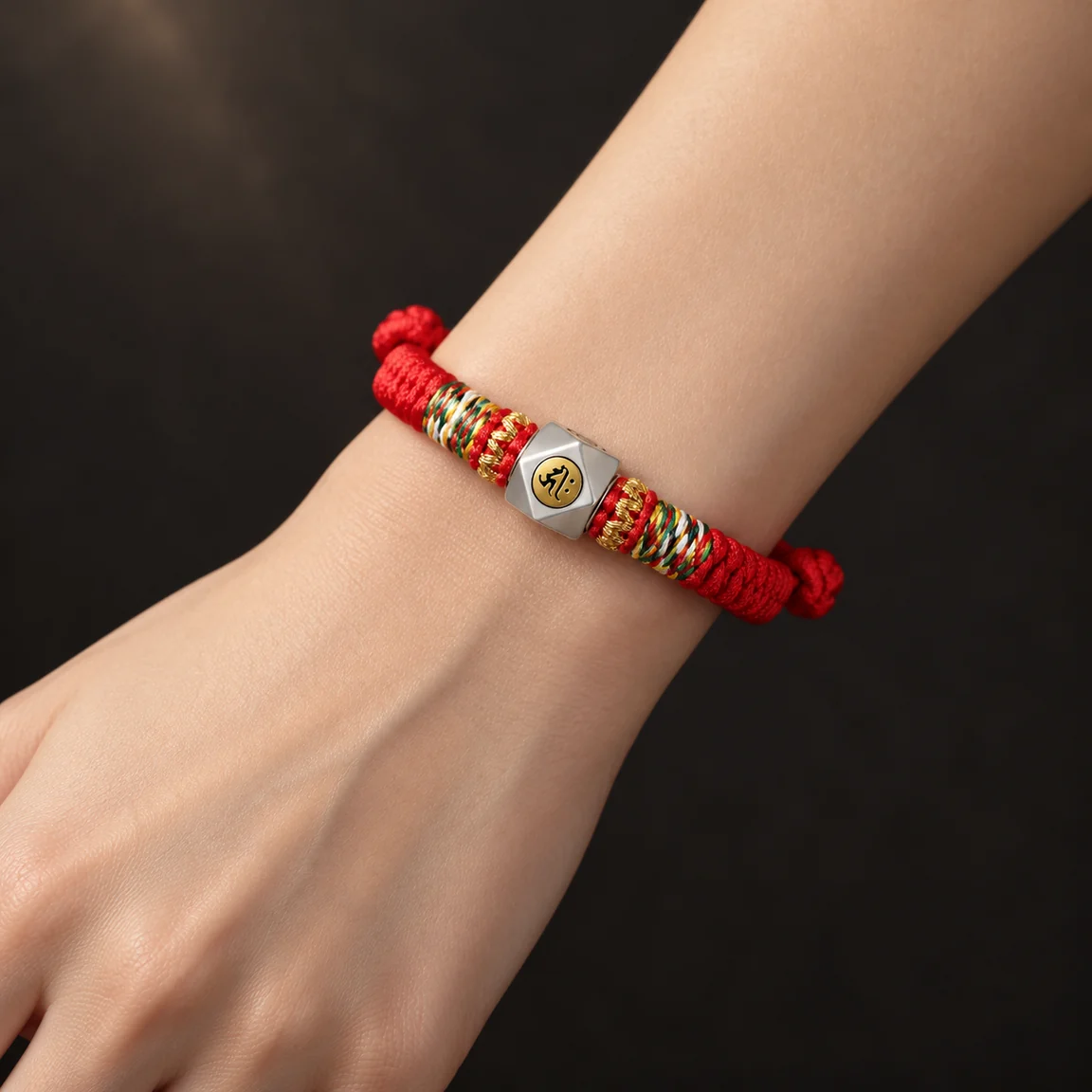
Chinese folk custom fixes the red cord to a moment rather than a wrist. In the zodiac birth year, Ben Ming Nian, wearing red is the traditional response, and red is the token of festivities, success and prosperity in that custom. The colour, not the hand, carries the meaning: the tradition names no wrist, so we will not invent one.
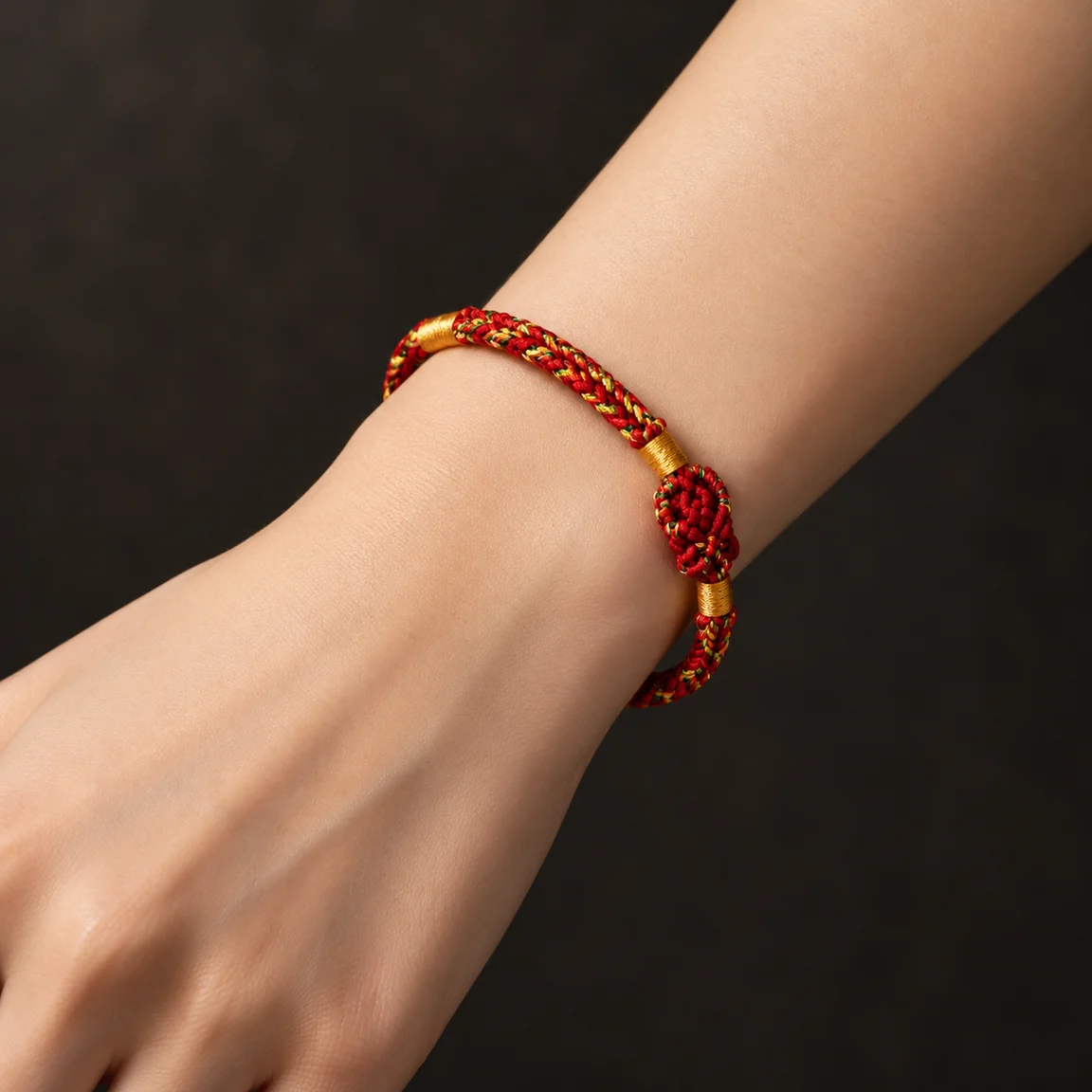
The red cord bracelet ($39) is hand-braided with an adjustable sliding closure, so both wrists fit. Many people choose the wrist they use less, so the braid stays snug and the charm does not knock against desks.
The obsidian and tiger’s eye bead bracelets
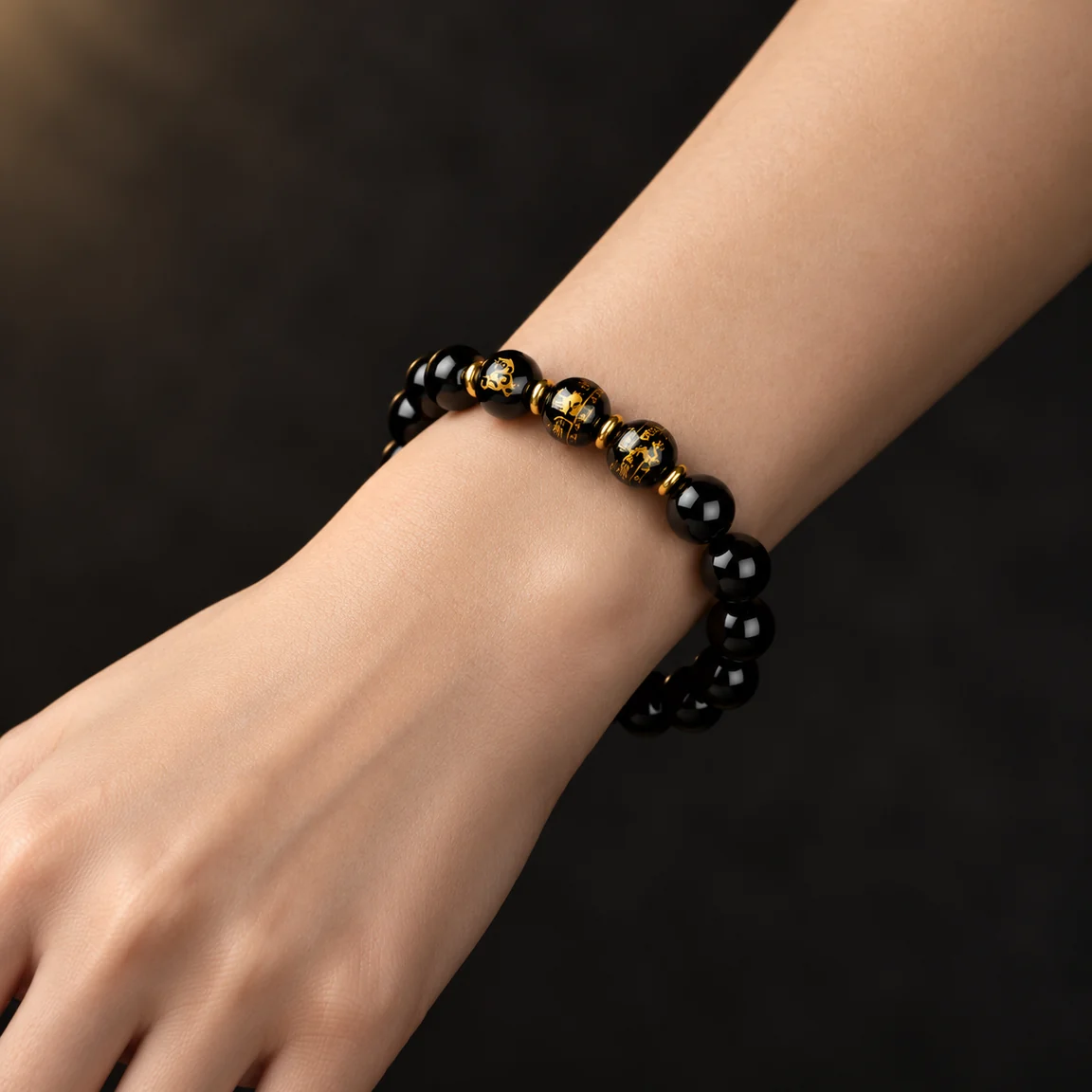
The beads carry the natal-guardian pairing, in which Chinese tradition matches each zodiac animal with a guardian deity — the obsidian bracelet and the tiger’s eye bracelet are both $59. Mineralogically, obsidian is natural volcanic glass, tiger’s eye is a quartz variety whose chatoyancy comes from light reflecting off quartz fibres, and on the Mohs scale quartz sits near 7 while glass sits near 5.5, which is why the beads scratch one another more easily than they scratch steel. As with the red cord, no tradition fixes a wrist; the practical choice is the same — the wrist you use less takes fewer knocks, keeping beads from chipping and stringing from wearing.

Rings
The steel rings — the Heart Sutra band, the spinning mantra rings and the Meander band, all $39 — go on whichever finger you like; the tradition names no finger. Wide bands fit snugger than thin rings, and a spinning band sits best on a finger you move often.

Pendants
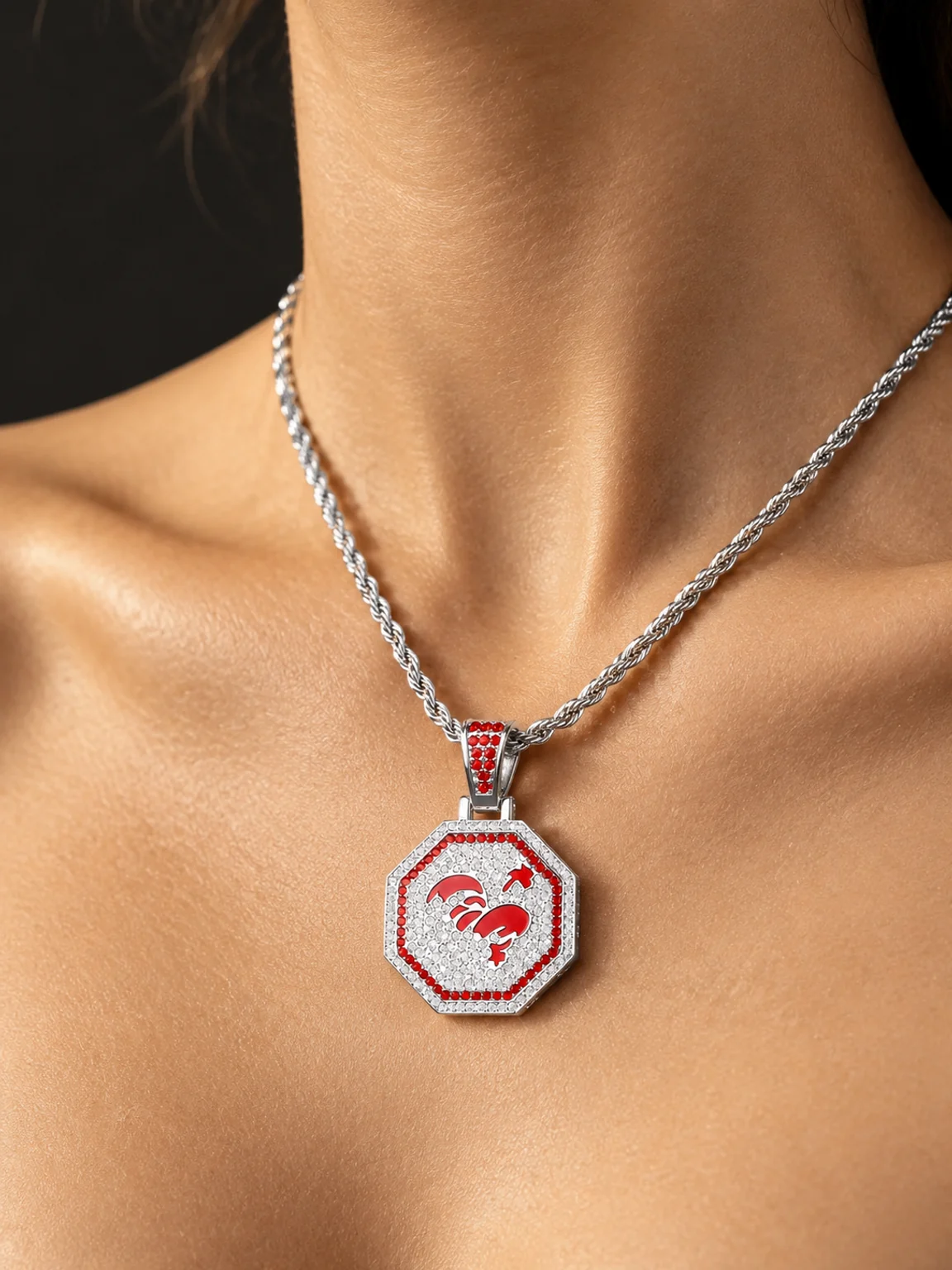
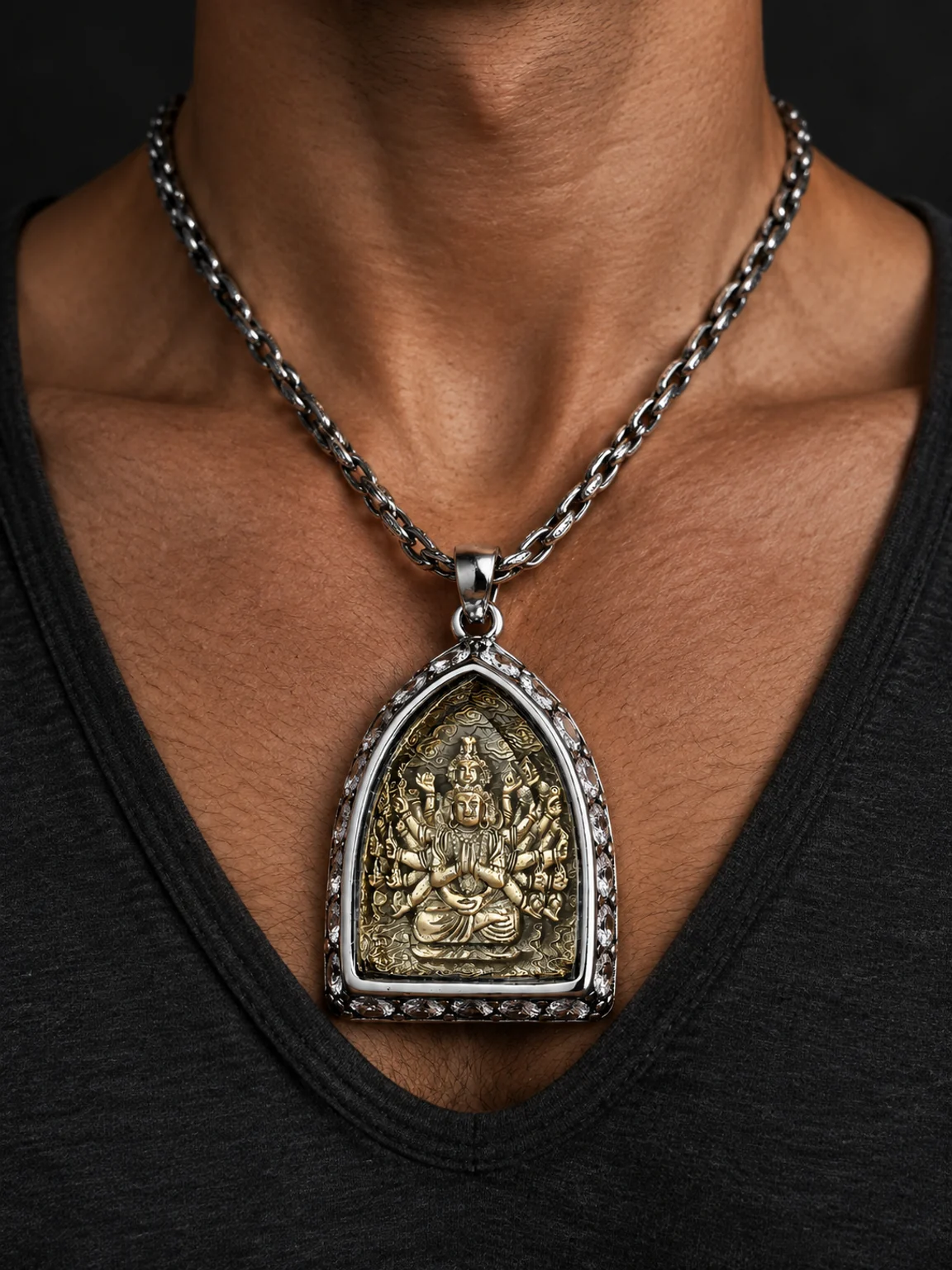
A pendant works inside the shirt or over it: shorter chains read as private, longer chains show the motif. The pave octagon pendant ($49) sits at the collarbone on a 60 cm rope chain; the titanium steel guardian pendant ($89) reads as a statement layer. The steel pieces shrug off daily wear, making them the easiest to keep on all day.
<p class=”house-note”>These are house recommendations, not doctrine.</p>
| Piece | What the tradition says | What we suggest |
|---|---|---|
| Red cord bracelet | Chinese folk custom fixes red as the colour of the zodiac birth year (Ben Ming Nian); it does not name a wrist. | Either wrist; choose the wrist you use less or the one without your watch. |
| Obsidian or tiger’s eye bead bracelet | No single tradition fixes this. | Either wrist; the wrist you use less takes fewer knocks, which keeps beads from chipping. |
| Steel bracelet or pendant | No single tradition fixes this. | Rings on any finger; pendants inside the shirt to stay private or outside to show. |
<p class=”house-note”>Nothing here claims the stones change an outcome; they mark an intention.</p>
2. Shower, bath, swimming and hot springs
Across all materials, the answer is the same: take it off. Water is the mildest part — soap, chlorine, salt and heat do the damage.
A braided cord soaks up water and soap and weakens at the knots; stone beads dull in chlorine and salt, and the stringing rots faster when damp. Steel tolerates water, but plated parts fade faster, and the site’s care notes are plain: do not soak the pieces, and do not wear them in the shower, the pool or the sea. Hot springs mix heat with minerals — treat them like a pool.
<p class=”house-note”>These are house recommendations, not doctrine.</p>
| The moment | Cord bracelet | Stone bracelet | Steel piece |
|---|---|---|---|
| Shower or bath | Remove | Remove | Remove |
| Swimming or hot spring | Remove | Remove | Remove |
| Sleeping | It depends | Remove | It depends |
| Gym or rough work | Remove | Remove | It depends |
| Cooking or cleaning | Remove | Remove | Remove |
| Everyday, all day | Wear | Wear | Wear |
<p class=”house-note”>Nothing here claims the stones change an outcome; they mark an intention.</p>
The bottom row is the point: everyday, all-day wear is what every piece is made for. At the gym a tucked-under pendant is fine, but a ring meets bars and straps, so take it off; household cleaners transfer from your hands to cords and beads, so those come off while cleaning too.
3. Sleeping in it
Nothing about sleep changes what a piece means — this is purely about wear and comfort.
Cord bracelets are light enough to keep on, but a braid can snag and a sliding closure can loosen overnight, so many people store theirs flat. Bead bracelets are the one to remove: rolling onto beads is uncomfortable and stresses the stringing. Rings depend on the band — smooth can stay, spinning can catch. Pendants come off because chains kink. A dry pouch on the bedside table solves all four cases.
4. Stacking with a watch and other bracelets
You can stack, but the order matters. Beads scratch one another more easily than they scratch steel, so stone pressed against stone, or against a steel charm, slowly trades marks, and a watch crown rubbing beads leaves dull patches. The fix is a spacer: a soft cord bracelet between the hard pieces absorbs the contact.

With a watch on one wrist, keep bracelets on the other and nothing next to the watch. If everything shares a wrist, put the cord closest to the hand, the stone bracelet behind it, the watch at the far end.
5. Other people touching it
The documented custom says nothing against another person touching a piece. What it does record is about giving: in the zodiac birth year, red items are traditionally bought by family or friends rather than by the wearer, which makes a red cord a natural gift.
For borrowing: a lent bracelet comes back wet, stretched or lost, and a piece that matters to you is allowed to stay personal. If a friend asks to try it on, a polite “this one stays on me” is a complete answer.
6. If the cord breaks
We have found no well-documented tradition that assigns a fixed meaning to a broken cord, so we will not invent one. What the material does is documented: a braided cord is the part that ages first — it softens with wear and lightens where it rubs, which is normal.
A snapped cord is usually the stringing, not the piece: keep the beads and the charm — a local restringing is often all it needs. If your piece arrived damaged or the cord gave way within 30 days of delivery, the site’s Refund and Returns Policy covers damaged and defective items — contact us with photos and, once confirmed, it will be replaced or refunded. For a cord that breaks later, the site publishes no repair or replacement promise, so contact us at [email protected] and ask about your piece; we would rather answer for your exact case than guess.
7. Everyday care and storage
Daily care is two minutes. Wipe the piece with a soft dry cloth after wearing, keep it clear of perfume, chlorine and household cleaners, and store it flat rather than hanging so the braid keeps its shape. For the stones, standard gem-care guidance is warm soapy water with a soft brush and no steam cleaning; the site’s notes add: skip abrasive polishes and ultrasonic cleaners. Keep pieces away from other jewellery that could scratch them, and a small dry pouch is the ideal home.

Steel pieces are the most forgiving: they ask only for a wipe and a dry place.
8. What this guide does — and does not — say
These wearing rules are care and styling advice, nothing more. The traditions quoted here — the Ben Ming Nian custom of wearing red, the pairing of each zodiac animal with a guardian deity, and the festive meaning of the colour red — are cultural background, not statements about what any piece does. Nothing here claims that a stone changes an outcome, brings luck, protects against illness, or replaces medical, financial or legal advice. The pieces are decorative jewellery that carries traditional symbolism, and the site’s stated practice of temple-blessed before dispatch is not a claim of effect. We make no warranty statements here: for returns, damaged-on-arrival items and everything else, see the Refund and Returns Policy or contact us.
9. Frequently asked questions
Five questions we are asked most about actually wearing a piece.
Can I wear my bracelet in the shower?
No — take it off. Soap, water and heat shorten the life of every material this site uses: a braided cord soaks up water and loses its shape, stone beads dull, and plated metal fades faster. The site’s care notes say the same: do not soak the pieces, and do not wear them in the shower, the pool or the sea. Put the piece on again only after perfume, lotion and sunscreen have dried.
Which wrist is correct for a red cord bracelet?
There is no single correct wrist. The Ben Ming Nian custom fixes red as the colour of the zodiac birth year but does not name a hand, so we do not either. The sliding closure fits both wrists. Many people choose the wrist they use less, so the braid stays snug and the charm does not knock against desks.
Do I need to take my ring off when I sleep?
It depends on the ring. A smooth band can stay on, a spinning band can catch on sheets, and any ring can feel tight by morning. A common practice is to take rings off at night and keep them in a small dry pouch on the bedside table, away from hand cream and sweat.
Will stacking my bead bracelet with a watch scratch it?
It can. Beads scratch one another more easily than they scratch steel, and a watch crown rubbing the beads leaves dull patches, so put a soft cord bracelet between the beads and anything harder. Bracelets on one wrist and nothing next to the watch on the other is the simplest arrangement. Dull patches over months are normal wear, not damage.
My cord has broken. Does the site repair it?
The site publishes no repair or free-replacement promise for cords that break later in wear, so we will not invent one. Its 30-day policy covers items that arrive damaged or defective: contact us with photos and, once confirmed, it will be replaced or refunded. If it broke months later, still contact us at [email protected] and we will tell you honestly what can be done for your piece. Keep the beads and the charm: a local restringing is often all that is needed.
Sources
TravelChinaGuide, Chinese Zodiac and Ben Ming Nian. https://www.travelchinaguide.com/intro/social_customs/zodiac/ben-ming-nian.htm
Oregon State University, Volcano World: Obsidian. https://volcano.oregonstate.edu/volcanic-minerals/obsidian
GIA, Tigers Eye Quartz. https://www.gia.edu/gia-museum-exhibit-tigers-eye-quartz
National Park Service, Mohs Hardness Scale. https://www.nps.gov/articles/mohs-hardness-scale.htm
GIA, Amethyst Care and Cleaning (quartz family). https://www.gia.edu/amethyst-care-cleaning